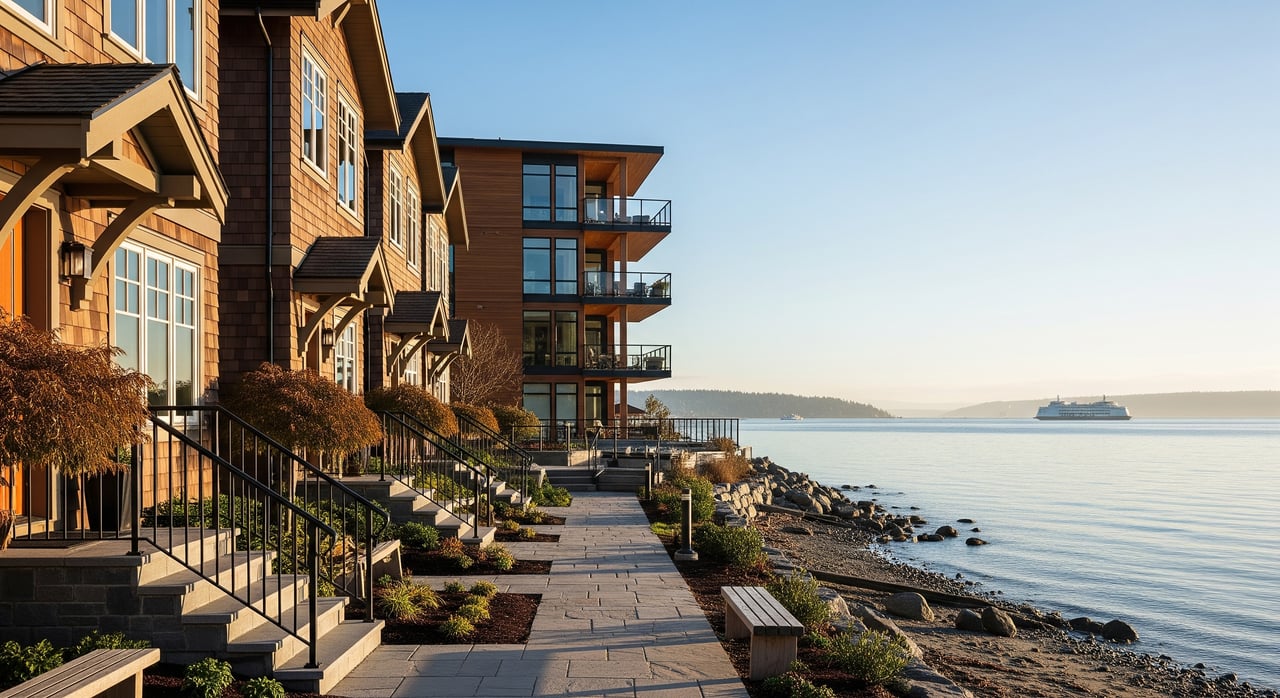
Condo vs. Townhome: Choosing In Edmonds
Trying to decide between a condo or a townhome in Edmonds? You’re not alone. Both options offer low‑maintenance living in a prime Puget Sound location, but they work very differently when it comes to ownership, costs, rules, and financing. In this guide, you’ll learn the key differences, what to expect in Edmonds, and how to choose with confidence. Let’s dive in.
Condo and townhome often describe how a place looks, but the legal ownership matters more. In a condominium, you own the interior of your unit plus a share of the common elements, and the association manages shared areas and collects dues. Washington law outlines how condominiums are formed and governed in the Washington Condominium Act (RCW 64.34) and the Washington Uniform Common Interest Ownership Act (RCW 64.90).
Many townhomes are fee‑simple, meaning you own the home and the land beneath it. Some townhomes, though, are legally condominiums. The project’s legal documents control who maintains what, what your insurance should cover, and how lenders will evaluate the property.
Monthly dues usually fund exterior and common‑area maintenance, insurance for common areas, landscaping, and sometimes utilities or amenities. A healthy association should have a reserve study that plans for big‑ticket repairs like roofs and siding. In older condo buildings, underfunded reserves can lead to special assessments, so review budgets, reserve studies, and meeting minutes before you commit.
Condo financing involves both you and the project. Many lenders and programs want a project review to confirm financial health, insurance, reserves, and owner‑occupancy levels. Government‑backed programs may also require approval under HUD’s condo guidance. Conventional lenders follow standards published by the enterprises, such as Fannie Mae’s condo project guidance. If a project is not approved or considered non‑warrantable, expect stricter terms or fewer loan options.
Fee‑simple townhomes often qualify like single‑family homes, which can simplify underwriting. You still must meet all loan criteria, but you typically avoid the condo project review step that can slow timelines.
Property taxes are assessed by parcel in Snohomish County. A fee‑simple townhome is often its own parcel, while a condo unit has a unit legal description within a condominium. Confirm details with the Snohomish County Assessor.
Both condos and townhomes can have HOA rules that limit rentals, set minimum lease terms, or manage pets and use of common areas. These policies affect loan options, resale demand, and investment potential. Check CC&Rs, bylaws, and meeting minutes for current rules, and review them against Washington’s community association statutes.
Edmonds offers a mix of downtown, waterfront, and neighborhood settings. Many condos cluster near shops, dining, and transit, while newer townhome communities appear on infill parcels near arterials. Commuters value proximity to the Edmonds–Kingston Ferry, Edmonds Station, SR‑104, and I‑5.
Waterfront and near‑shore homes may be subject to the City’s Shoreline Master Program and environmental rules. Before you write an offer, explore local planning and permitting resources on the City of Edmonds website and check flood risk using the FEMA Flood Map Service Center. In a seismic region, pay attention to building age, retrofit history, and HOA maintenance plans.
Choose a condo if you want:
Choose a townhome if you want:
Review these documents before you commit:
Ask these questions:
If you’re deciding between a condo and a townhome in Edmonds, start with ownership structure and the HOA’s financial health, then layer in lifestyle and commute needs. From reviewing reserve studies to coordinating lenders that work smoothly with condo project reviews, you deserve a calm, predictable process. When you are ready to compare specific buildings and communities, reach out to Becca Locke for local guidance and a clear action plan.

Real Estate


Real Estate

A Local's Guide to One of Mill Creek's Most Active Community Destinations.
A Mill Creek Agent's Take on Where to Focus Your Time and Money Before Listing.

Lifestyle
Whether you're buying your first home, selling the one you've outgrown, or relocating to the Snohomish County area, you deserve an advisor who knows this market from the inside out. I've lived in Mill Creek for 13 years, sold 500+ homes across the greater Puget Sound region, and built a practice around one thing: making sure my clients make confident, informed decisions. Whether you're a first-time buyer navigating a competitive Snohomish County market, a homeowner ready to sell and move on, or relocating to the Pacific Northwest and trying to figure out where to land, I bring the same thing to every situation: deep local knowledge, honest guidance, and a process that keeps you informed from start to finish.